
The truth about Protection mode
Your body isn’t “tight.”
It’s guarding.
And you’re not broken — you’re signaling.
Why Your Muscles and Breath "Brace" While at Rest (or With Exercise)
Your system has one job: keep you safe.
When it senses overload, old stress, shallow breath, or instability…it flips on a protective bracing pattern.
This isn’t about strength.
It’s not about flexibility.
It’s not about age.
It’s your nervous system quietly saying:
“I don’t feel safe enough to relax yet.”
Try This in 20 Seconds
Stretching won’t fix bracing.
Changing the signal will.
THE CHARLIES™
(read the instructions below before doing the move)
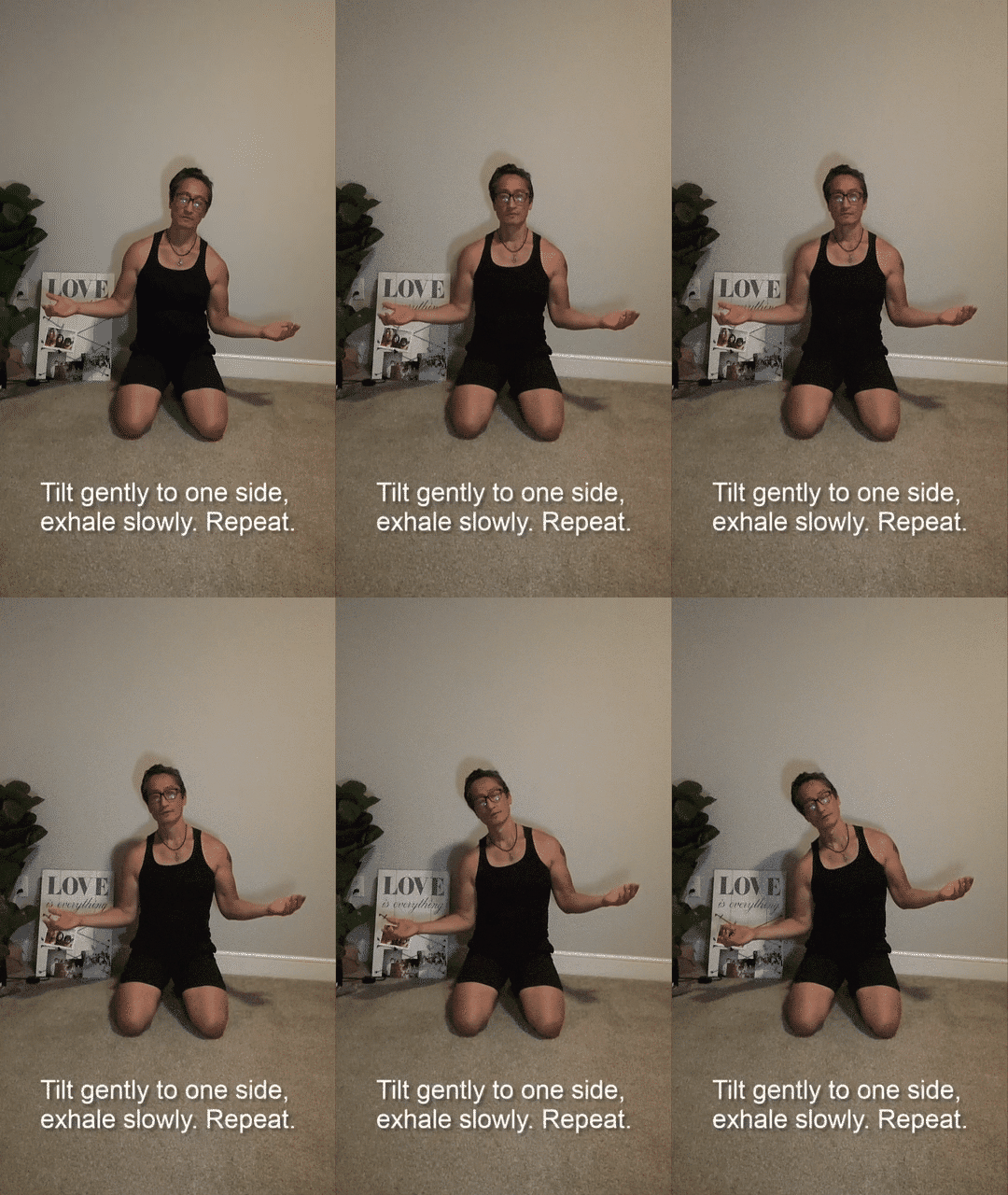
- Stand, or sit with knees below hip level
- Arms out to the side
- Palms up, Exhale slowly as you gently lean. (Exhale longer than you think you should and lean LESS than in the video)
- Do the side with less resistance
You’re not trying to “stretch” anything here. You’re giving your brain a quieter signal to work with.
(**You can move even less than what's pictured. I'm just showing you the move but oftentimes the smaller the move, the greater influence it has on the nervous system.)
When the intercostals move gently, your system reads it as, “we’re not under threat.”
If you’ve been guarding for a long time, it may take a bit before you notice anything. That’s normal.
Do it as long or as often as you need — think of it as practice for your system, not a performance.
What people usually notice:
• a little more room in the ribs
• an easier breath
• tension turning down instead of up
• a wave of calm, yawn, or tiredness
That last one is your system easing out of defense mode.
If it feels subtle, that’s exactly how safety begins.
Safety behaves like a dimmer switch, not a light switch.
If you want to go deeper into resetting your nervous system, join us inside the "Hipsters" Community (see below)
We’re working on this exact pattern together right now.
Why This Works
Your body doesn’t stay tight because it’s stubborn.
It stays tight because it has no evidence that you’re safe.
It’s not the stress-- it’s the lack of recovery signals.
If danger signals outweigh safety signals, your body stays braced.
That’s why I don’t give people “stretches.”
Stretching under threat makes the pattern worse.
I teach body literacy — learning to talk to your body in the language it actually understands.
If danger signals outweigh safety signals, your body stays braced.
-ko
Want more?
Inside Hipsters, we’re working through:
- identifying your Tension Pattern
- the reset to turn off protective bracing
- how to exercise without your body fighting you
- 30-second signal drops for overloaded days
- gentle support with others doing this with you
This is where real change happens — not in a comment thread.
👉 Come inside
Found this from Instagram? You’re right on time.
“Most people think constant tightness means their body is damaged or failing.
But what you just felt — even if it was small — was your body letting its guard down.
Not because you forced it.
Not because you stretched it.
But because, for a moment, it felt safe enough to soften.
That matters more than it might seem.
It means your body isn’t stuck.
It means this pattern can change.
It means something deeper is possible.
You don’t need to figure everything out right now.
If you’d like, you can take the next step and explore this at your own pace.”
Nothing is required.
Learn Why Your Body Chronically Tenses, Tightens & Fatigues -- And How To Begin Letting It Go
James Ko
30 Years Physical Therapist Specializing In Chronic Tension, Pain & Performance
Copyright 2026. KOHEALTH LLC. - Privacy Policy | Terms of Service | Contact