
EASE OUT of Chronic Tension, Pain, Fatigue & Overwhelm

Week 2: Everyday Activities
"It's not what you Do But how you do it that determines What your body's going to feel Like"
False Belief: "I don't rush or push that often..."
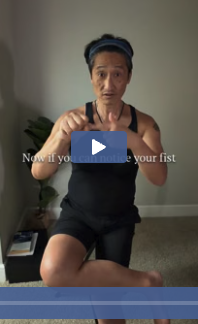
Click to play
What you experience today:
What it feels like to catch protection in real time.
You also learn:
✓ Where your energy is going every day
✓ Why invisible pushing, bracing, rushing, or trying hard can keep the system protective
✓ How to notice when your body is doing more than the moment requires
✓ How a small shift in how you do something can create more ease
The goal today is not to stop doing things.
It’s to begin noticing how your system is doing them.
TODAY'S INSTRUCTION:
Today, choose one simple activity.
Something ordinary.
Brushing your teeth.
Walking across the room.
Making coffee.
Washing dishes.
Sitting at your computer.
Getting in and out of a chair.
Before or during the activity, pause and notice:
Am I rushing?
Am I holding my breath?
Is my jaw working?
Are my shoulders lifting?
Is my stomach gripping?
Am I trying to get through this?
Am I using more effort than this actually requires?
You do not need to change everything.
Just see if you can do the same thing with five percent less effort.
A little softer.
A little slower.
A little less bracing.
A little less urgency.
Not perfect.
Not relaxed.
Just five percent less.
Then notice what happens.
Does the activity feel different?
Does your body respond differently?
Does anything soften?
Does anything feel more supported?
Does your system feel even slightly less loaded?
That is the practice.
Not doing less with your life.
Doing what you do with less protective effort.
Check In With Me
To get the most out of this program, reply by TEXT at
(469) 290-2531
-or- Email
And tell me:
"What was your biggest takeaway from today's session?"
And answer this question:
"What ordinary activity did you notice yourself doing with extra effort?"
Examples:
• Brushing teeth
• Washing dishes
• Driving
• Walking
• Sitting at the computer
• Cooking
• Getting ready
• Helping someone
• Trying to learn something
• Thinking through a problem
The win today is not perfect ease.
The win is noticing how your system approaches the moment.
Your body is constantly adjusting to the demands of the moment.
But demand is not only physical.
Demand can also come from urgency, pressure, fear, responsibility, frustration, attention, and the way you prepare yourself to complete a task.
This means two people can do the same activity and have very different responses.
It also means you can do the same activity on two different days and your body may respond differently depending on how loaded or protected your system already is.
When the system is protective, even simple tasks can come with extra effort:
• jaw tension
• breath holding
• shoulder lifting
• stomach gripping
• rushing
• gripping with the hands
• over-focusing
• trying to get it right
• trying to finish quickly
These patterns are not character flaws.
They are signs that the body may be trying to support, stabilize, protect, or prepare.
The problem is that this extra effort can quietly add load throughout the day.
Today’s practice helps you notice that load while it is happening.
And when you can notice it, you can begin giving your system a different option.
A little less force.
A little less urgency.
A little more support.
A little more ease.
Selected References
Brosschot, J. F., Gerin, W., & Thayer, J. F. (2006). The perseverative cognition hypothesis: A review of worry, prolonged stress-related physiological activation, and health. Journal of Psychosomatic Research, 60(2), 113–124.
McEwen, B. S. (1998). Protective and damaging effects of stress mediators. The New England Journal of Medicine, 338(3), 171–179.
Moseley, G. L., & Butler, D. S. (2017). Explain Pain Supercharged. NOI Group Publications.
Sterling, P. (2012). Allostasis: A model of predictive regulation. Physiology & Behavior, 106(1), 5–15.
Stay With The Process
This session will be available for the next 5 days.
Not because you're behind.
Not because you need to rush.
But because small, consistent moments of awareness tend to create more change than occasional big efforts.
If you need access again after the timer expires, just text or email me and I'll make sure you have what you need.
For now, simply notice:
What am I doing?
How am I doing it?
And could my system do this with five percent less effort?
That’s enough for today.