
EASE OUT of Chronic Tension, Pain, Fatigue & Overwhelm
Week 1: Hidden Triggers
"The Things That Quietly Make Everything Worse"
False Belief: "My symptoms appear out of nowhere. My body must be broken."
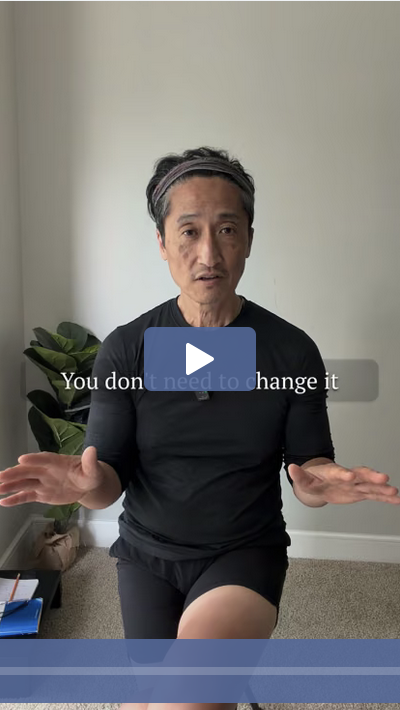
Click to play
What you experience today:
You'll feel a how a hidden trigger builds.
You also learn:
✓ Why triggers often feel hidden
✓ How invisible tension can quietly build before symptoms get louder
✓ How thoughts, focus, pressure, and “important things” can add load to your system
✓ Why fear of what symptoms might mean can become one of the most powerful hidden triggers
✓ How noticing creates a small space between reaction and choice
The goal today is not to fix anything.
The goal is to begin seeing what may have been happening beneath the surface.
TODAY'S INSTRUCTION:
Once or twice today, when you notice a symptom or sensation getting louder, pause and ask:
Where does my mind go next?
Does it go to:
• What if this gets worse?
• What if this means something bad?
• What if I’m not healing?
• What if this never changes?
• What if something is wrong with me?
You do not need to stop the thought.
You do not need to fix the sensation.
You do not need to force yourself to relax.
Just notice.
That noticing matters.
Because even a tiny moment of awareness can create space.
And in that space, options begin to become visible.
Check In With Me
To get the most out of this program, reply by TEXT at
(469) 290-2531
-or- Email
And tell me:
"What was your biggest takeaway from today's session?"
And answer this question:
"When a symptom or sensation gets louder, where does your mind usually go next?"
Examples:
• I start wondering if something is wrong
• I worry it will get worse
• I immediately try to fix it
• I start scanning my body
• I get frustrated
• I shut down
• I don’t know yet, but I’m starting to notice
There are no wrong answers.
This is not about judging your reaction.
It’s about beginning to see the path your system usually takes.
That’s the work for today.
Persistent symptoms often feel random, but the body usually gives signals before things feel overwhelming.
These signals can be subtle:
• breath holding
• jaw tension
• stomach gripping
• shoulder lifting
• increased focus
• scanning
• worry
• urgency
• bracing
Over time, these small responses can accumulate and make the system more vulnerable to tipping into stronger protection.
One important part of this work is learning to notice these earlier signals.
Not because you need to control them.
Not because you need to fix them.
But because awareness creates choice.
And choice is very different from automatic reaction.
When a symptom appears and the mind immediately moves into fear, the body may respond by becoming more protective.
That protection can show up as more tension, more guarding, more monitoring, and more amplification.
Today’s practice helps you begin noticing that pattern earlier.
Selected References
Brosschot, J. F., Gerin, W., & Thayer, J. F. (2006). The perseverative cognition hypothesis: A review of worry, prolonged stress-related physiological activation, and health. Journal of Psychosomatic Research, 60(2), 113–124.
Flor, H. (2003). Cortical reorganisation and chronic pain: Implications for rehabilitation. Journal of Rehabilitation Medicine, 35(41 Suppl), 66–72.
Moseley, G. L., & Butler, D. S. (2017). Explain Pain Supercharged. NOI Group Publications.
Apkarian, A. V., Hashmi, J. A., & Baliki, M. N. (2011). Pain and the brain: Specificity and plasticity of the brain in clinical chronic pain. Pain, 152(3 Suppl), S49–S64.
Stay With The Process
This session will be available for the next 5 days.
Not because you're behind.
Not because you need to rush.
But because small, consistent moments of awareness tend to create more change than occasional big efforts.
If you need access again after the timer expires, just text or email me and I'll make sure you have what you need.
For now, simply stay curious.
Stay observant.
And allow today's experience to unfold over the next few days.
One small observation at a time :)